
Meet Erika Torres, APRN, PMHNP-BC
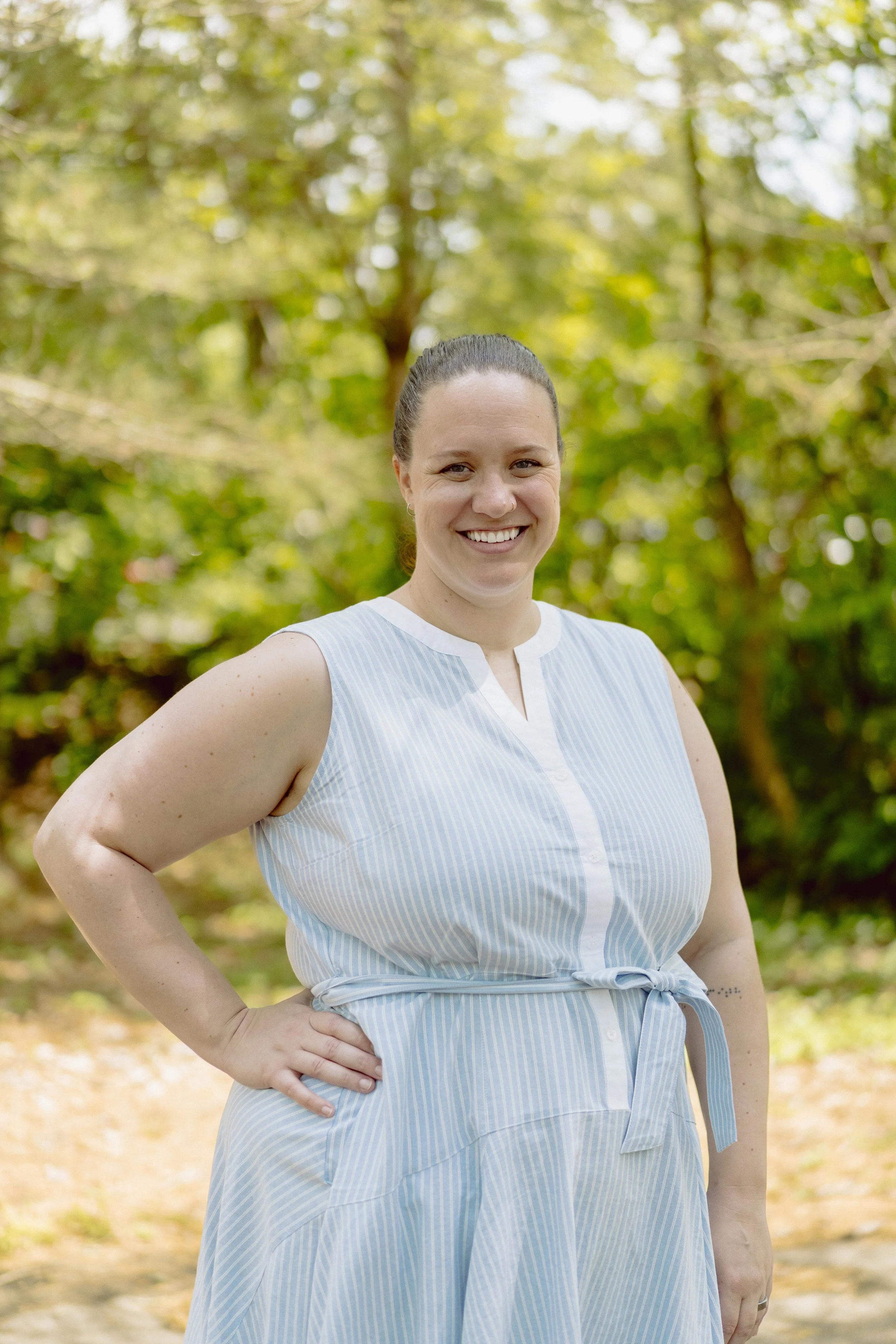
Psychiatric care works best when your provider actually listens to you. That sounds simple, but in a system built around rushed appointments, revenue cycles, and algorithms, it isn’t the standard that it should be. I built Abide Maternal Psychiatry because I believe you deserve a provider who takes the time to know your full story, who listens to you and believes you when you describe your symptoms, and who walks alongside you as a genuine partner in your healing.
I am a board-certified Psychiatric Mental Health Nurse Practitioner licensed in Tennessee. I completed my undergraduate training at Columbia University in New York City, where I studied Neuroscience and Behavior and graduated Magna Cum Laude, and fell in love with everything about the brain. I went on to earn my Master of Science in Nursing from Vanderbilt University, ranked among the top psychiatric nurse practitioner programs in the country, where I completed all of my clinical training through Vanderbilt Psychiatric Hospital. I believe the ongoing education is important, as psychiatry is a rapidly evolving field. Because of this, I am currently completing my Perinatal Mental Health Certification (PMH-C) through Postpartum Support International and the Integrative Psychiatry Incubator with Dr. Elana Miller. I also serve as adjunct faculty at Vanderbilt University School of Nursing, where I precept and teach the next generation of psychiatric providers.
My clinical background spans the full spectrum of psychiatric care. After graduation, I worked on an all-male forensic psychiatry unit at the state hospital, caring for men who were unable to stand trial due to the severity of their mental illness. I went on to work at an inpatient psychiatric hospital, a partial hospitalization program, and an intensive outpatient setting before moving into outpatient psychiatry, which is where I found my home. Watching patients improve month after month, getting to know their families, and being part of real and lasting change in their lives is the work I was made for. My clinical specialties include reproductive psychiatry (including fertility, pregnancy, postpartum, and beyond) and the outpatient management of serious mood disorders, including bipolar disorder and psychosis.
My Story
I have lived what feels like four different lives — and I believe that is exactly why I can sit with patients who are in the middle of a chapter that does not make sense yet.
I grew up on a cattle farm in Colorado, competed on horseback, and was a two-time rodeo queen at the oldest rodeo in the state. After high school, I moved to New York City to study at an acting conservatory. While I was there, I started boxing to stay in shape — and my coach told me I was good enough to compete. Within a short time, I was ranked number one in the Northeast for my weight class, training full time with my sights set on the 2016 Olympics in Rio. Then, 82 days before the National Qualifying Trials, I fell off a bicycle and broke my arm. Just like that, it was over.
That kind of loss — the sudden, disorienting kind — is something I understand from the inside. I spent the next year and a half grieving at Columbia University, where I had enrolled at my coach's urging after the injury. I did not know what God was doing. But somewhere in that season, my faith in Jesus was deepened as I depended solely on Him, and my life has not been the same since.
I graduated Magna Cum Laude. Then my husband and I felt called, against all odds, to Nashville. Vanderbilt did not receive my transcript in time for my first application and I wasn’t accepted in that first round. But we knew God was calling us, so I turned down four other nursing programs that had accepted me, and we moved anyway — no jobs, no cars, one small apartment — trusting that it would work out. I reapplied. I got in. I completed my training there.
After having my first child, deep in the throws of my Master’s education, I had to fight my own battle with postpartum depression. This work is deeply personal to me because I remember how normalized my depression and anxiety were in that early season of motherhood, how I told myself over and over that I “should” be able to do this and enjoy being a mom, but it wasn’t until I got treated, got medicated, that I came back into myself and realized how sick I had been. Coming out of that depressive fog to see the peace and joy that can be connected to motherhood fuels me to show up for my patients every day, not just with support, but with solutions.
My husband says that when I decide to do something, I do it. That is true. I always joke that “tenacity is just stubborn with a purpose.” It is the same quality that carried me through a broken Olympic dream, an unexpected college application, and a cross-country move on faith — and it is what drives me in the clinical room every day.
I have learned that the hardest seasons are rarely the end of the story. If you are in one right now, I want you to know: you are not alone, and I am not afraid to sit in the hard part with you.
Why Psychiatry, and Why This Work
Long before I had the credentials to do this work, I was already being pulled toward it.
In my early twenties, while working as a personal trainer in New York, I kept having conversations that went far beyond fitness. Clients would cry before workouts, confess things they had never told anyone, and leave still carrying whatever they had walked in with — something I was not qualified to address but knew was the root of so many problems. I recognized the look. I had worn it myself.
As a young teenager, I desperately needed a therapist and never got one in the small town where I grew up. I carried that for a long time. So when those clients sat across from me, I understood something important: the gap between needing help and receiving it can cost a person years. I did not want to be someone who watched people fall into that gap.
That conviction became deeply personal again when I had my first daughter while finishing my master's degree. I found myself up every night during feedings, sobbing quietly so my husband would not wake up, flooded with intrusive thoughts about something happening to her. I told myself it was normal. Other mothers seemed to agree. So I white-knuckled through it — for seven months.
Seven months of intrusive thoughts. Seven months of crying alone in the dark. Seven months of struggling instead of enjoying those beautiful new days with my baby.
Then I started Zoloft. Within three days, the intrusive thoughts were gone. I remember making an emergency call to my prescriber because I felt so different I was worried I was becoming manic (being a nursing student during this time meant I was hyperaware of all the things that could go wrong). She asked what I had been doing, and I told her: "I baked muffins." We both laughed. I had been so depleted that the simple act of baking a dozen muffins felt like a miracle, a previously unattainable version of myself.
That experience is the reason I do this work. I think about the mothers who are still in that darkness and fear right now, convinced that what they are feeling is a normal part of motherhood because so many other women also experience it. It is not. I also think about the teenager I once was, who needed someone to show up and didn't have that. I became a psychiatric provider because I know what it costs to wait — and because the right support, at the right time, can turn struggling into fully living.
That is what I am here to do.



How I Show Up
My colleagues joke that there is always laughter coming from my office. That is true. I also have a way of asking the one question that gets to the real thing underneath everything else, and sometimes patients will be mid-sentence about their boss or their budget and suddenly they are in tears. I joke that "I’m just looking for the bear so I can poke it." Everyone has this vast forrest in their mind, an overgrown, interconnected network of thoughts, beliefs, dreams, and fears. In this beautiful and deep network of the mind, there are “bears,” fears, griefs, sorrows, secrets, that hid behind the trees, always in the background, keeping us scared and limited. Part of my job is to find the bear, and to poke it. Name it. Call it out. See how big it is. See how mean it is. I go looking for what is actually going on, I name it, and then we figure out what to do about it together.
I am direct, but not cold. I will tell you what I actually think and what the evidence says, even when it is not what you want to hear. I believe when presented with correct information, we can work together to find the solutions to the problems that plague you. But I will do it in a way that leaves you feeling supported rather than judged. Students who have trained with me have said that I have a way of delivering hard news and still making patients feel like there is hope and things are going to be okay. I believe that is because I genuinely think things are going to be okay and that hope is not a bandaid but a reality.
My faith is not separate from my clinical work. It is the foundation of it. My husband and I are deeply rooted in our church community, and my Christian faith shapes the way I see every person who walks through my door: as someone made with purpose, worthy of healing, and capable of far more than they can currently see. For patients who share that faith, I am glad to incorporate biblical wisdom and prayer into our work together, with full respect for where you are on your journey.
Outside of the office, I can usually be found chasing my two daughters around the backyard or the zoo. I serve on the worship team at our church and love to sing. At the end of the day, once the girls are in bed, I knit. Socks and blankets, mostly.
My office is full of flamingos. When I was coming out of my own postpartum depression, there was a movement called "Get Your Pink Back" inspired by the flamingo: as they raise their young, they lose their brilliant color, and only when the babies grow more independent does the mother begin to get her pink back. That image has stayed with me. It is what I want for every mother (and father) I work with.
“The hardest seasons are rarely the end of the story. You are not alone, and I am not afraid to sit in the hard part with you.”
— Erika Torres
APRN, PMHNP-BC (Board-Certified Psychiatric Mental Health Nurse Practitioner)
Bachelor of Science, Neuroscience and Behavior, Columbia University (Magna Cum Laude)
Master of Science in Nursing, Vanderbilt University, Psychiatric Mental Health Nursing
Adjunct Faculty, Vanderbilt University School of Nursing
PMH-C (Perinatal Mental Health Certification, in progress, Postpartum Support International)
Integrative Psychiatry Incubator, Dr. Elana Miller (in progress)
Clinical training: Vanderbilt Psychiatric Hospital, Middle Tennessee Mental Health Institute (Forensic Unit), PHP/IOP, Outpatient Psychiatry
Licensed in Tennessee